 Skip to content

Every spring across Wisconsin and Minnesota, the same story plays out on rooftops that nobody checked through the winter. What started as a small lifted shingle in November became a water entry point by January. What looked like a minor ice buildup in February left a damaged fascia and a stained ceiling by March.
Winter in this part of the country is genuinely hard on roofs, and the freeze-thaw cycles that define our shoulder seasons cause more cumulative damage than most homeowners realize until they are looking at a repair bill they were not expecting.
Here is what to look for on your own home once the snow melts and the temperatures stabilize.
Quick Spring Roof Inspection Checklist
- Missing or curled shingles
- Granule loss or dark patches
- Damaged flashing around vents and chimneys
- Gutters pulling away from the roofline
- Water stains on ceilings or attic surfaces
- Mold or musty smells in attic spaces
Why Freeze-Thaw Cycles Damage Roofs
Most people assume the coldest, snowiest stretch of winter is when roofs take the most damage. In reality, the freeze-thaw transition periods in early and late winter are when the real problems develop.
What actually happens during a freeze-thaw cycle: Snow and ice melt during a warm spell, and that water finds its way under shingles, into flashing gaps, and along roof edges. When temperatures drop overnight, that water refreezes and expands with enough force to:
- Lift and separate shingles
- Pull flashing away from chimney bases and skylights
- Crack caulk seals around penetrations
- Widen water channels a little further with every cycle
A Wisconsin or Minnesota roof can go through dozens of these cycles in a single winter, and each one compounds the damage from the last.
Roof Damage You Can Spot From the Ground
You do not need to get on your roof to do an initial check. Start from the ground and work your way to the interior before calling in a professional for a closer look.
From the ground:
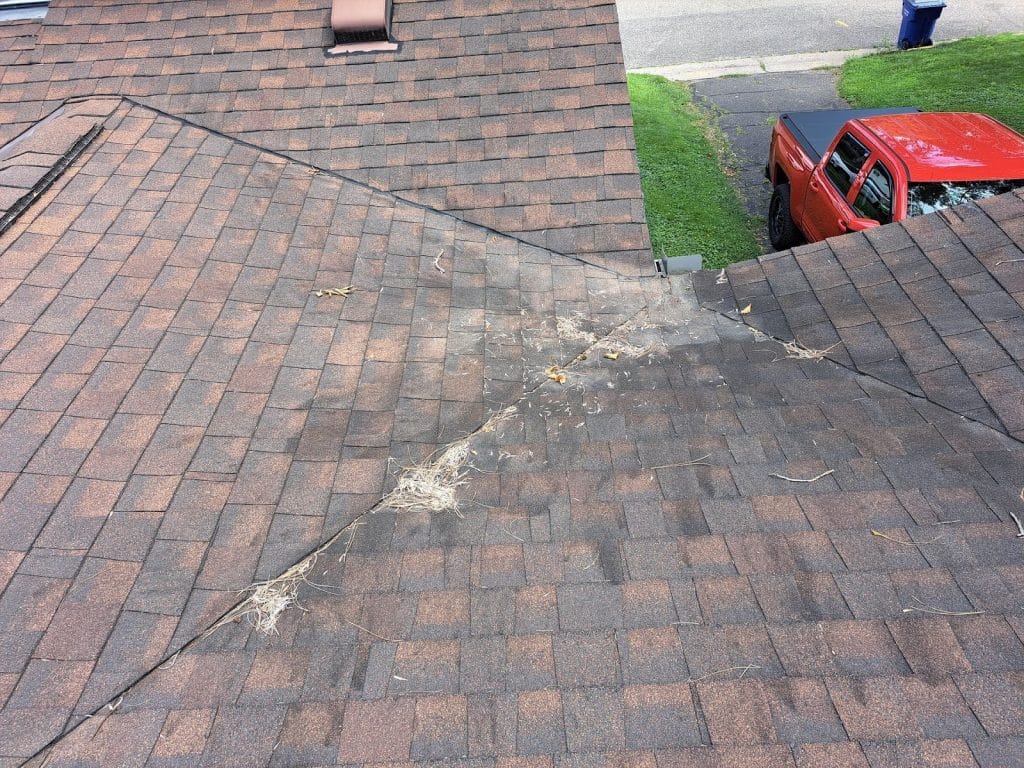
- Missing, curled, or buckled shingles along the ridge line or edges
- Granule loss visible as dark or patchy areas on shingle surfaces
- Sagging anywhere along the roofline, which can indicate structural moisture damage
- Lifted or separated flashing around chimneys, vents, and skylights
- Gutters pulling away from the fascia or showing visible damage from ice weight
From inside your attic:
- Daylight visible through the roof deck
- Water stains or dark streaking on rafters and sheathing
- Soft or spongy areas in the decking when pressed
- Mold or mildew smell, which often indicates moisture has been present for some time
On your ceilings and walls:
- Water stains, particularly in corners or along exterior walls
- Bubbling or peeling paint near the roofline
- Damp insulation in upper-floor rooms
Any one of these signs warrants a professional inspection. Combined, they suggest winter left your roof in worse shape than it looks from the curb.
How Ice Dams Cause Hidden Roof Leaks
Ice dams are one of the most common and most underestimated sources of winter roof damage in Minnesota and Wisconsin.
How an ice dam forms:
- Heat escaping through the roof melts snow near the ridge
- That water runs down and refreezes at the cold overhang
- The ice wall traps meltwater behind it
- With nowhere to go, water backs up under the shingles and into your home
Why the damage is easy to miss: Ice dam damage rarely shows up right away. Water that gets in during February may not appear as a ceiling stain until April or May, by which point it has often already affected insulation, sheathing, and interior finishes.
If you had significant ice buildup on your roof this past winter, a spring inspection is worth scheduling even if everything looks fine from the inside.
How Roof Damage Can Get Worse in Spring
A lifted shingle or a small flashing gap is a simple repair when caught early. The same issue left through a spring of heavy rain and another freeze-thaw fall can become a rotted deck section, damaged insulation, and water-stained interior finishes that require far more extensive work to address.
Roof damage has a way of getting worse quickly in this climate, and the gap between a minor repair and a full replacement is often just one season of inattention.
“Krumm Exteriors went above and beyond to make sure I was satisfied with the results. The quality of their work exceeded my expectations, and the finished results look incredible. It is rare these days to find a company that genuinely cares about its customers the way they do.” — Jimmy Perez.
Schedule Your Spring Roof Inspection
At Krumm Exteriors, our spring roof inspections assess the full system, not just the shingles. Our team checks flashing integrity, ridge and valley conditions, soffit and fascia, gutter attachment, and any areas where freeze-thaw movement may have created openings for water.
If we find damage, we give you an honest assessment of whether repair or replacement is the right call, walk you through your options clearly, and provide a transparent estimate with no surprises.
As CertainTeed Shingle Master Pro and preferred Owens Corning partners, we work with premium materials backed by manufacturer warranties, and our own workmanship guarantee means any installation issue is fixed at no charge.
If your roof went through a tough Wisconsin or Minnesota winter and you have not had it inspected yet this spring, talk to our local expert team to schedule an inspection.
Frequently Asked Questions
How soon after winter should I have my roof inspected?
As soon as temperatures are consistently above freezing and snow has cleared from the roof, which in Wisconsin and Minnesota typically means late March through April. The sooner you catch freeze-thaw damage, the less opportunity it has to worsen through the spring rain season.
Can I inspect my own roof, or do I need a professional?
You can do a useful ground-level check and attic inspection yourself, and the signs listed above are a good starting point. A professional inspection gets eyes on the flashing, ridge, and valley details that are not visible from the ground and are often where the most significant winter damage occurs.
Does homeowners insurance cover freeze-thaw roof damage?
It depends on your policy and the cause of damage. Sudden damage from a specific storm event is more commonly covered than gradual deterioration from repeated freeze-thaw cycles. Krumm Exteriors works directly with insurance companies on storm damage claims and can help you understand what your inspection reveals in the context of your coverage.
How long does a roof repair typically take?
Most repair jobs are completed in a single day. More extensive work involving deck replacement or multiple damaged sections may take longer. Krumm Exteriors provides a clear timeline as part of every estimate so you know what to expect before work begins.
How do I know if winter caused roof damage?
Signs include missing shingles, visible flashing damage, attic moisture, and ceiling stains. Even if damage is not obvious, freeze-thaw cycles can create hidden issues that only a professional inspection will catch.

